
Moths
PROFESSIONAL INDIANMEAL MOTH CONTROL- NASSAU COUNTY, NEW YORK
Indianmeal moths, also known as pantry, weevil, flour, and grain moths, infest stored food products. The larvae of these moths have been found in grains, cornmeal, flour, dried fruits, nuts, dry pet food, powdered milk, seeds, chocolate, and candy. Pantry moth larvae can chew through cardboard and thin plastic bags, so they can easily get into supposedly sealed food items. Adult moths measure 3/8" in length and have a 3/4" wingspan. The distal two-thirds of their forewings are usually reddish brown with a copper luster. They can also be dark gray or bronze. The proximal one-third of their forewings is grayish brown with a dark band at the intersection between the proximal and distal regions. The hindwings, in general, are consistently gray. This moth is not native to India but was named for feeding on Indian meal (cornmeal). This pest lives in a wide range of conditions and is found on every continent except Antarctica. Indianmeal moths belong to the family Pyralidae and can be found throughout the United States; they are among the most common pantry pests in New York, where they frequently infest residential homes, restaurants, supermarkets, food processing facilities, and food storage warehouses.
THE ANATOMY OF AN INDIANMEAL MOTH
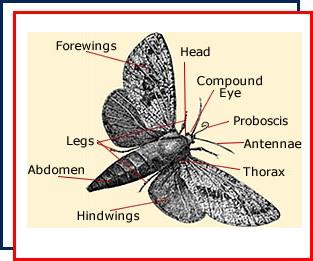

Indianmeal moths have a pair of forewings that serve to protect their hindwings. Scales cover the bi-colored wings of the moths.
Indianmeal moths are invertebrates, lacking any internal skeleton.
Indianmeal moth bodies are divided into three sections: head, thorax, and abdomen.
Indianmeal moths have two compound eyes, two antennae, and six legs.
Indianmeal moth antennae are threadlike and are used to detect food and mating partners.
Indianmeal moths possess a proboscis located on the anterior portion of their heads, which they use to feed with. Moths can coil up their proboscis.
Indianmeal moths breathe through spiracles located on their thorax and abdomen.
Indianmeal moths have hearing organs located in the hair on their thorax at the base of their wings.
INDIANMEAL MOTH LIFE CYCLE
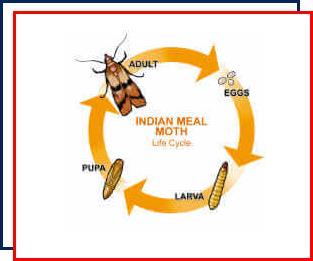
Indianmeal moths undergo complete metamorphosis, which is comprised of four stages: the egg, larva, pupa, and adult. Female pantry moths can lay up to four hundred eggs in cracks and crevices on or near foodstuffs. If temperatures exceed 50 degrees Fahrenheit, larvae will begin to hatch in 2 to 14 days. Pantry moth larvae have between five and seven instars and mature in four to five weeks. Fully grown larvae often wander away from food to spin cocoons where they will pupate. The pupal stage lasts about two weeks, and an adult Indianmeal moth will emerge from the pupa. The entire life cycle of the pantry moth is completed in six to eight weeks under favorable conditions.
INDIANMEAL MOTH EXTERMINATION & PREVENTION LONG ISLAND, NEW YORK
Controlling an infestation of indianmeal moths may involve the use of sticky pheromone traps that catch the adult male moths and prevent breeding. Insecticidal aerosols and sprays can also be applied to cracks and crevices to control the moths. However, prevention is the best strategy for controlling pantry moths in your Nassau County, Long Island home or business. When purchasing bulk grains, meals, seeds, nuts, dried fruit, flour, etc., inspect them carefully for signs of a pantry moth infestation. Webbing along the corners of packages or on the product contained within is a telltale sign of Indianmeal moth larvae. Food products should be stored in pest-proof containers in a cool, dry place. Infested foods should be discarded, and the shelves cleaned thoroughly to eliminate food material and pantry moth eggs or larvae in cracks and crevices. Vacuum the shelves and wash the cupboards with warm, soapy water. Good sanitation is vital, so spilled foods should be cleaned up promptly. Biological control of Indianmeal moths includes the Habrobracon hebetor, a braconid wasp species which parasitizes the larvae of pantry moths.